
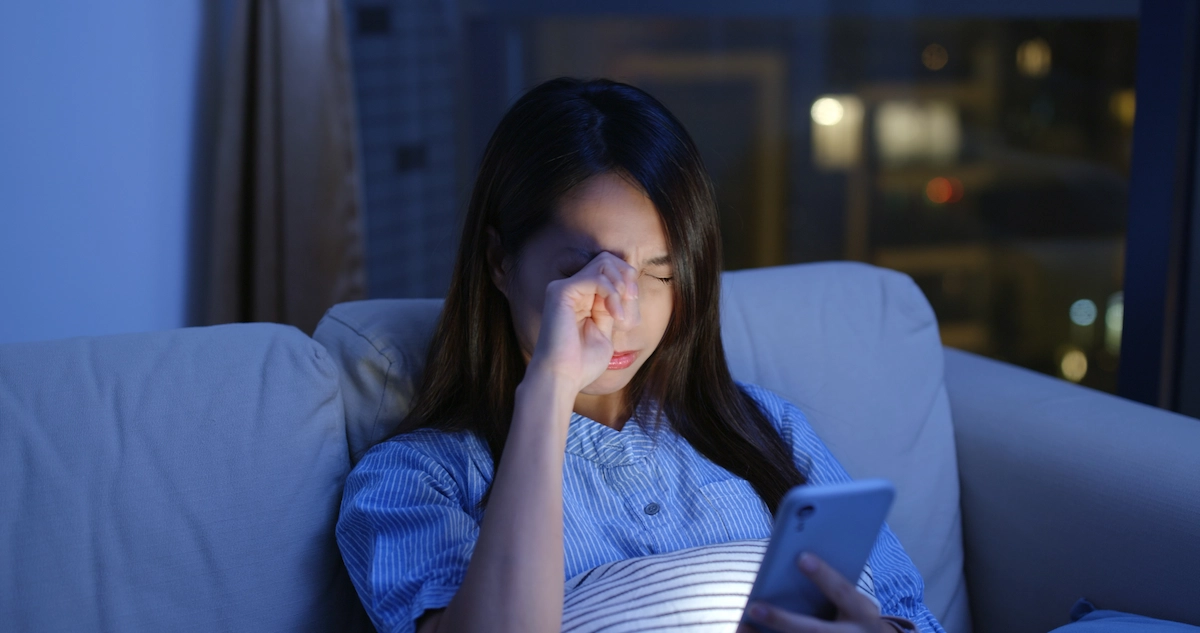
Dry, burning, or gritty eyes can feel especially frustrating at the end of the day. If your symptoms become more noticeable after dark, factors like screen time, indoor air, incomplete blinking, and eyelid inflammation may be contributing. Dry eye treatment can help identify what is behind your discomfort and create a plan for lasting relief.
Why do dry eye symptoms get worse at night?
Dry eye symptoms often worsen at night because your eyes have spent the day exposed to screens, air conditioning, wind, allergens, and other irritants. By evening, your tears may evaporate more quickly or no longer provide enough moisture to keep your eyes comfortable.
Nighttime symptoms can include:
- Burning, stinging, or scratchiness
- Redness or watery eyes
- Blurry vision that improves after blinking
- A heavy or tired feeling in the eyes
- Light sensitivity
- The feeling that something is stuck in your eye
Dry eye can also make it difficult to wind down for sleep, especially if your eyes feel irritated while reading, watching TV, or using your phone.
Can screen time make dry eyes worse before bed?
Yes, screen use can worsen dry eye symptoms before bed. When you focus on a phone, tablet, computer, or television, you may blink less often and less completely. This can allow tears to evaporate and leave the surface of your eyes feeling dry or irritated.
Try taking a break from screens before bed, increasing text size to reduce strain, and using the 20-20-20 rule during longer screen sessions. If you use artificial tears, ask your eye doctor which type is appropriate for your symptoms.
Could your sleeping environment be drying out your eyes?
Yes, dry indoor air can contribute to nighttime eye discomfort. Heating, air conditioning, ceiling fans, and direct airflow from vents can speed up tear evaporation while you are awake and asleep.
A few adjustments may help:
- Avoid pointing a fan directly at your face
- Consider using a humidifier in a dry bedroom
- Remove eye makeup fully before bed
- Stay hydrated throughout the day
- Use contact lenses only as directed by your eye doctor
If you wake up with dry, irritated eyes, talk with your eye doctor. Some people may have incomplete eyelid closure during sleep or an underlying dry eye condition that needs more targeted care.
Can eyelid inflammation cause dry eyes at night?
Yes, inflammation around the eyelids can affect the glands that produce the oily layer of your tears. When this layer is not working well, tears can evaporate too quickly, causing ongoing dryness and discomfort.
We can help determine whether meibomian gland dysfunction, inflammation, or another issue is contributing to your symptoms. Depending on your needs, treatment options may include OptiLight IPL therapy or low-level light therapy.
End the day with more comfortable eyes
You should not have to deal with burning, gritty, or tired eyes every night. With a comprehensive eye exam, we can evaluate the cause of your dry eye symptoms and recommend personalized treatment options to help your eyes feel more comfortable from morning through bedtime.